
Imagine a seasoning that brings the taste of the ocean to your food. Ocean salt is more than just a flavor enhancer. It connects us to the vast oceans of the world. Harvested from the Pacific near Sooke, British Columbia, and the Atlantic around Les Îles de la Madeleine, it adds a special touch to your dishes.
Choosing natural salt means you’re picking something beyond regular table salt. Ocean salt tells the story of the sea, bringing minerals and flavors that make cooking special. Each grain is a piece of ocean chemistry and careful harvesting.
Sea salt is becoming more popular among chefs and home cooks. It’s a natural choice that offers a pure taste. This taste connects us to the marine world.
Key Takeaways
- Ocean salt is harvested from pristine marine environments
- Natural salt offers superior mineral content compared to refined options
- Sea salt provides unique flavor profiles for culinary experiences
- Sustainable harvesting supports marine ecosystem preservation
- Gourmet chefs prefer ocean salt for its complex taste characteristics
Understanding Ocean Salt: Nature’s Pristine Seasoning
Ocean salt is more than just a seasoning. It adds a world of flavor and minerals to your cooking. This turns simple dishes into gourmet meals.
The magic of ocean salt starts in the world’s seas. There, chemical processes create a unique seasoning. Unlike regular salt, ocean salt has a rich mix of trace minerals.
Chemical Composition of Seawater
Seawater is full of essential minerals. It usually has:
- Sodium chloride (main component)
- Magnesium
- Calcium
- Potassium
- Trace amounts of over 80 different minerals
Natural Minerals and Trace Elements
Those who love gourmet salt know the value of ocean salt’s minerals. These elements add depth and complexity to flavors.
| Mineral | Percentage in Ocean Salt | Potential Benefit |
|---|---|---|
| Magnesium | 0.5% | Supports muscle and nerve function |
| Calcium | 0.4% | Promotes bone health |
| Potassium | 0.3% | Regulates blood pressure |
Differences from Regular Table Salt
Regular table salt is heavily processed, losing its natural minerals. Ocean salt, on the other hand, keeps its original nutrients. This gives a more authentic and flavorful taste.
Saltwest Salts captures the essence of Pacific waters, delivering a salt that’s as close to nature as possible.
The Ancient History of Sea Salt Harvesting
Sea salt has been vital to humans for thousands of years. Ancient cultures saw its value, turning it into a key economic resource. The history of artisanal salt is linked to survival and cultural growth.
Long before refrigeration, early civilizations knew sea salt’s power to preserve. The Egyptians, Greeks, and Romans used it for:
- Food preservation
- Religious ceremonies
- Trading currency
- Medical treatments
Roman soldiers were sometimes paid in salt, leading to the word “salary” from Latin salarium. This showed salt’s huge value in ancient times. Sea salt drove trade along coasts, making it a major economic force.
“Salt was worth its weight in gold during ancient times” – Historical Trade Historians
Different places had their own ways of harvesting sea salt. Coastal areas in China, the Mediterranean, and Celtic lands developed special methods. These methods showed local conditions and cultural practices.
Today, making artisanal salt keeps ancient traditions alive. It connects our food with thousands of years of human creativity and survival.
Modern Ocean Salt Production Methods
Exploring sustainable sea salt production is a journey into a world where old meets new. It shows how tradition and innovation come together. This process turns ocean water into valuable culinary items.
Salt production today mixes old ways with new tech. Producers use both traditional skills and modern tools to make top-notch salt.
Traditional Hand-Harvesting Techniques
Hand-harvesting is the truest way to make sustainable sea salt. Skilled workers use methods passed down through generations:
- Solar evaporation in shallow clay ponds
- Manual raking of salt crystals
- Careful selection of premium salt formations
Industrial Processing Systems
Modern systems help traditional methods, making salt quality consistent and production bigger:
- Advanced mechanical harvesting equipment
- Precision filtering systems
- Temperature-controlled processing environments
Quality Control Measures
Keeping sustainable sea salt quality high needs strict quality checks:
| Quality Parameter | Verification Method | Acceptable Range |
|---|---|---|
| Mineral Content | Spectroscopic Analysis | 99.5% Purity |
| Moisture Levels | Humidity Testing | Less than 0.5% |
| Trace Element Balance | Elemental Composition Scan | Regulated Mineral Spectrum |
By mixing careful traditional methods with the latest tech, salt makers create premium salt. This meets the highest culinary standards.
Sustainable Harvesting Practices in Salt Production
Sustainable sea salt production is key to saving our oceans and meeting food needs. Today’s salt makers use new methods to protect marine life. They focus on ways to harvest organic salt that are good for the planet.
Saltwest Salts leads in sustainable sea salt making. They show how to harvest salt without harming the environment. Their methods include:
- Minimal water disruption during salt extraction
- Protecting local marine biodiversity
- Implementing renewable energy in production processes
- Using eco-friendly packaging materials
Choosing sustainable sea salt helps protect our oceans. Artisan salt makers work hard to keep their environmental impact low. They make sure each grain of salt is good for both people and nature.
“Every grain of salt tells a story of environmental stewardship” – Ocean Conservation Research Team
Now, there are ways to know if salt is sustainably made. Look for labels that show:
- Responsible harvesting techniques
- Minimal ecosystem disruption
- Carbon-neutral production methods
- Support for marine conservation initiatives
Your choice has a big impact. By picking sustainable sea salt, you improve your cooking and help save the oceans.
The Role of Geography in Salt Quality
Location is key when it comes to gourmet salt. The unique qualities of ocean waters greatly affect the quality and taste of premium salt. This makes it more than just a seasoning.
Geography plays a big role in shaping salt quality. Each coastal area adds its own special touch to salt making. This makes every pinch of salt a unique reminder of where it comes from.
Prime Harvesting Locations
Some of the best gourmet salt comes from certain places known for their clean waters:
- ALCYON salt from Les Îles de la Madeleine in Canada
- Saltwest Salts harvested near Sooke, British Columbia
- French Atlantic Coast salt beds
- Hawaiian volcanic coastal regions
Impact of Ocean Currents
Ocean currents are key in making salt quality better. The way water moves affects the minerals in the salt. This shapes the unique taste of premium salt.
Environmental Factors
Many environmental factors affect salt making:
- Water temperature
- Mineral density
- Local ecosystem
- Precipitation levels
- Wind patterns
Your taste experience is linked to these detailed geographic factors. Each grain of gourmet salt shares a story of its oceanic roots. It brings the essence of its place of origin right to your plate.
Types of Premium Ocean Salt Products
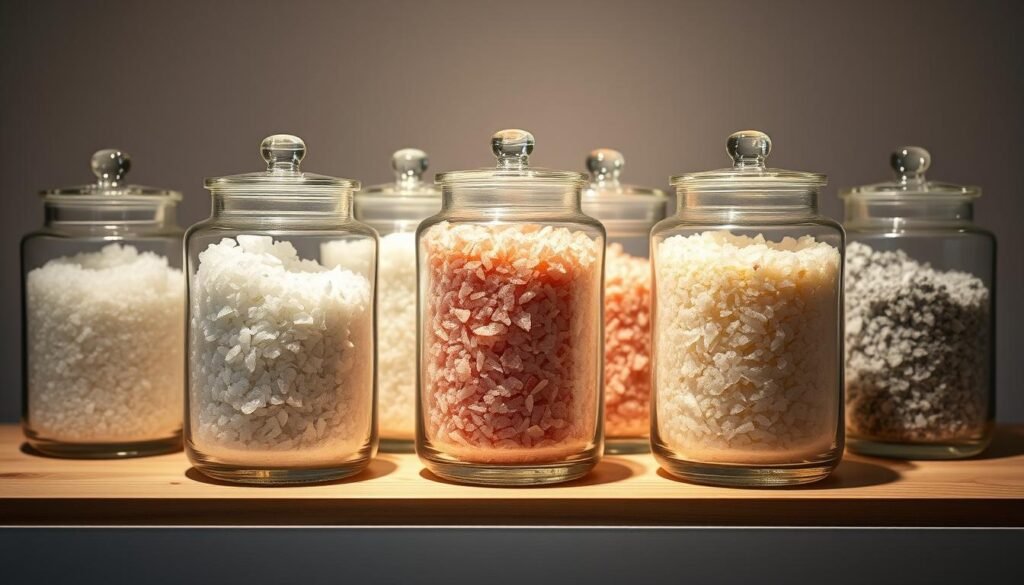
Exploring gourmet salt reveals a world of artisanal products. These can change how you cook and eat. From fine-grained cooking salts to large flaky finishing salts, there’s a premium salt for every kitchen.
Knowing the different ocean salts can make your cooking better. Each type has its own taste and use in the kitchen.
- Fine Grain Salts: Perfect for everyday cooking and baking
- Flaky Sea Salts: Ideal for finishing dishes with a delicate crunch
- Coarse Salts: Great for marinades and salt crusts
- Specialty Salts: Unique flavors from specific ocean regions
Now, let’s look at the different premium salt varieties:
| Salt Type | Texture | Best Uses |
|---|---|---|
| Celtic Grey Salt | Moist, coarse | Roasted vegetables, grilled meats |
| Fleur de Sel | Delicate, flaky | Finishing seafood, chocolate desserts |
| Himalayan Pink Salt | Fine to coarse | Cooking, salt blocks, seasoning |
When picking artisanal salt, think about the texture, minerals, and how you’ll use it. Each type adds a special flavor that can make your dishes stand out and impress everyone.
Artisanal Salt Crafting: From Atlantic to Pacific
Explore the world of gourmet salt, where artisans turn ocean water into culinary gems. Artisanal salt is more than seasoning; it’s a craft that captures coastal landscapes and traditions.
Every region has its own salt-making story. From Maine’s misty shores to the Pacific Northwest’s rugged coast, small-batch producers are changing the game. They’re making exceptional artisanal salt.
Small-Batch Production Methods
Artisan salt makers work with great precision and care. They use:
- Hand-harvesting salt crystals from chosen ocean waters
- Slow evaporation to keep natural minerals
- Little processing to keep the salt’s unique traits
Regional Variations
Gourmet salt shows off its origin’s unique character. Fleur de Sel from Brittany, France, is different from California’s sea salt. Each place’s environment – like water salinity and minerals – shapes the salt’s taste.
Specialty Finishing Salts
Cooking fans love these specialty salts for their rich flavors and textures. Artisanal salt makers create special varieties that make simple dishes stand out. From smoky Pacific Northwest salts to delicate Mediterranean blends, these salts turn cooking into art.
Discover the world of artisanal salt – where every crystal tells a story of craftsmanship and natural beauty.
Health Benefits and Mineral Content
Exploring natural salt reveals a wealth of health benefits. Unrefined ocean salt is different from regular table salt. It has a rich profile of trace minerals that boost your well-being.
Organic salt is a nutritional gem. It keeps essential minerals that your body needs. These minerals are vital for your health and help your body function well.
- Magnesium: Supports muscle and nerve function
- Potassium: Helps regulate blood pressure
- Calcium: Strengthens bones and teeth
- Zinc: Boosts immune system performance
Choosing the right salt matters for your nutrition. Mineral-rich salt has a better mineral profile than table salt. Table salt loses many nutrients during processing.
| Mineral | Quantity in Ocean Salt | Health Benefits |
|---|---|---|
| Magnesium | 0.5% – 1.2% | Supports heart and muscle health |
| Potassium | 0.3% – 0.7% | Regulates blood pressure |
| Calcium | 0.2% – 0.5% | Strengthens bone structure |
Choosing high-quality, minimally processed salt is more than just flavor. It’s a choice to nourish your body with nature’s best minerals.
Culinary Applications and Professional Usage
Professional chefs use gourmet salt to make simple dishes into amazing meals. Premium salt is more than just a flavor enhancer. It’s a key ingredient that can change how your food tastes.

Choosing the right salt can greatly improve your cooking. Different premium salts have unique qualities. They can bring out the best in various ingredients and cooking methods.
Chef’s Recommendations for Salt Selection
- Use coarse sea salt for finishing grilled meats
- Select delicate flake salt for garnishing desserts
- Choose mineral-rich gourmet salt for roasted vegetables
- Opt for fine-grain salt in baking recipes
Pairing Guidelines
| Dish Type | Recommended Salt | Flavor Enhancement |
|---|---|---|
| Seafood | Flaky Atlantic Sea Salt | Subtle mineral notes |
| Chocolate Desserts | Himalayan Pink Salt | Rich, complex undertones |
| Grilled Meats | Smoked Sea Salt | Deep, smoky essence |
Professional chefs see premium salt as an art form. By picking and using the right salt, you can make your cooking as good as a restaurant’s. It’s all about the right choice and application.
Storage and Preservation Techniques
Keeping your artisanal salt in top shape is key. It needs special care to keep its unique taste and minerals.
Start with the right container. Go for airtight glass or ceramic ones. They keep your salt safe from moisture and air. Stay away from metal, as it can change the salt’s flavor.
- Keep salt away from direct sunlight and heat sources
- Store in a cool, dry place with consistent temperature
- Use containers with tight-sealing lids
- Avoid storing near strong-smelling spices or ingredients
Humidity is a big problem for natural salt. Even a little moisture can make it clump and lose its texture. If it’s humid where you live, add a small food-grade silica gel packet to your container. It helps soak up extra moisture.
Pro tip: For artisanal salt collections, invest in specialized salt cellars with moisture-resistant seals.
Different salts need different storage. Sea salts are delicate, while coarse salts are tougher.
By using these storage tips, your salt will stay fresh and flavorful. It will make your cooking even better for months.
Environmental Impact and Conservation Efforts
The world of sustainable sea salt production is more than just getting minerals from the ocean. Artisanal salt makers are now focused on saving our marine ecosystems. They also aim to give high-quality organic salt to those who care about the planet.
Keeping our oceans safe needs many steps. Salt producers are using new ways to lessen harm to the environment:
- Lowering carbon footprint during harvesting
- Helping with marine habitat restoration
- Using water wisely
- Keeping coastal areas safe
Ocean Preservation Initiatives
Many organic salt makers are joining important conservation efforts. They are doing things like:
- Working with marine research groups
- Helping protect coral reefs
- Supporting fishing that’s good for the sea
“Every grain of sustainable sea salt represents a commitment to ocean health and environmental stewardship.” – Marine Conservation Expert
Sustainable Packaging Solutions
New packaging ideas are changing the salt industry’s impact on the environment. Producers are using eco-friendly materials. These choices cut down on waste and lessen plastic use.
| Packaging Material | Environmental Impact | Recyclability |
|---|---|---|
| Recycled Glass Containers | Low Carbon Footprint | 100% Recyclable |
| Biodegradable Paper Pouches | Minimal Waste | Compostable |
| Reusable Ceramic Jars | Zero Single-Use Plastic | Infinitely Reusable |
By picking sustainable sea salt with eco-friendly packaging, you help protect our oceans. Your choices really help in ocean conservation efforts.
The Future of Ocean Salt Production
The world of ocean salt is changing fast, with a focus on being green. As people learn more about what they eat, salt makers are finding new ways to harvest. These methods protect the sea while giving us great flavors.
The future of salt making is all about caring for the planet. Brands are using new tech to lessen harm to the environment. They use less water and help local coastal areas. This means your favorite salts taste great and help save the planet.
More people want to know where their food comes from. They like to see how it’s made and support brands that do it right. From California to France, the salt industry is becoming more open and focused on quality.
Your adventure with ocean salt is just starting. As we learn more and make things better, you’ll see new things in salt making. It’s a mix of old ways, new ideas, and caring for our planet. This is good news for all sea salt lovers.